Marketing teams have more to handle than ever. From creating content and managing social media to researching keywords, designing visuals, and tracking campaigns, the workload can quickly pile up.
That’s where AI marketing tools can make a real difference. The right tool can take care of repetitive tasks, speed up content creation, and help marketers spend more time on strategy and creative work.
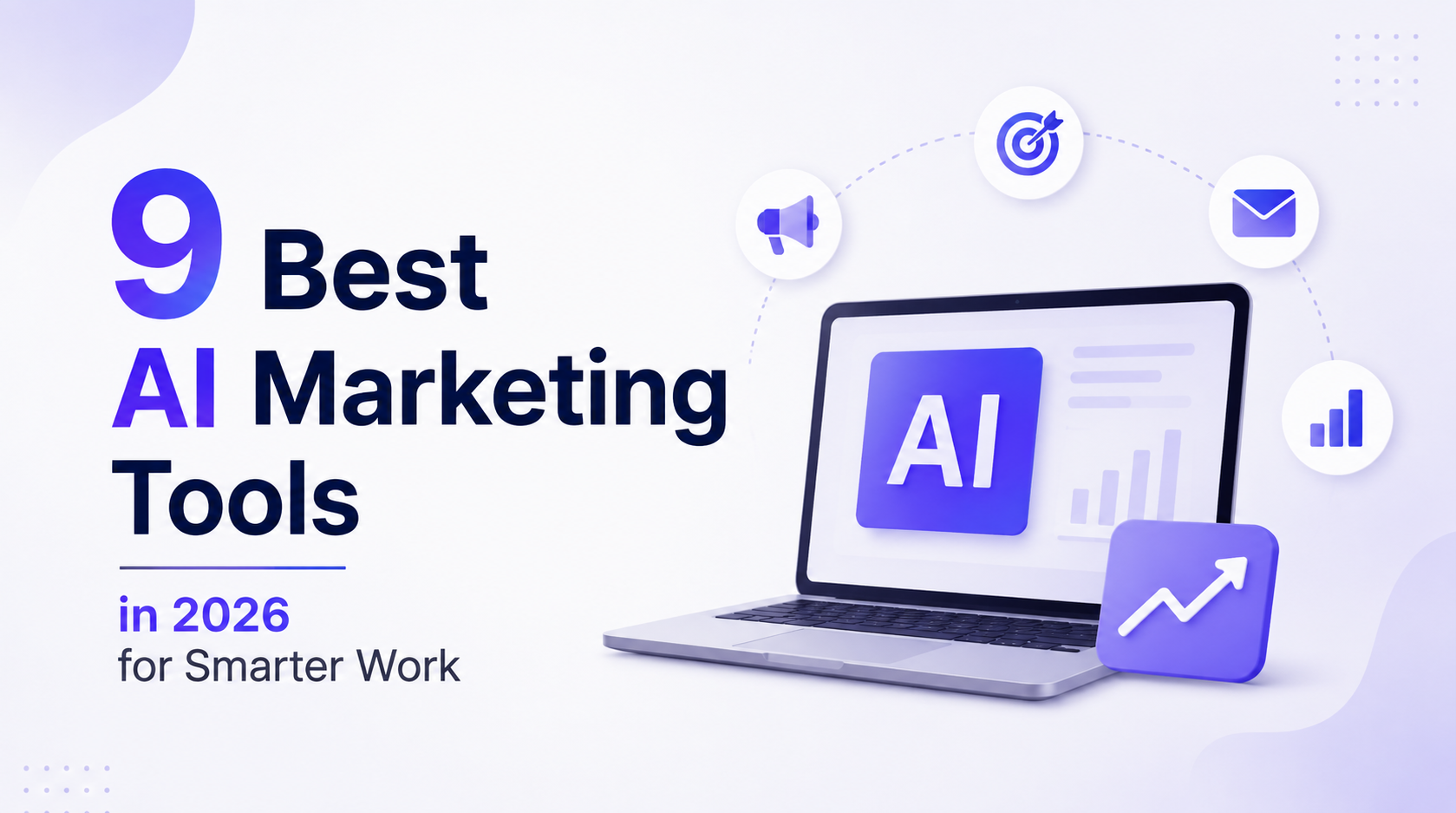
>To make things easier, we’ve rounded up 9 of the best AI marketing tools in 2026 for different marketing needs. Whether you work in SEO, social media, content, design, or video, there’s an option here worth trying.
1. Hootsuite – Social Media Marketing & Management
Hootsuite is a well-known social media management platform that helps marketers manage multiple social channels from one place.
Its AI-powered features can help with content ideas, captions, scheduling, and social media workflows. Instead of jumping between different platforms, marketers can manage much of their day-to-day social activity from a single dashboard.
Best for: Social media managers, agencies, and marketing teams.
Why use it: It can save time on social media planning and publishing while keeping campaigns organized.
2. Sider – AI Assistant for Everyday Marketing Tasks
Sider is an AI-powered assistant designed to help users work with content directly from their browser.
For marketers, tools like Sider can be useful for summarizing information, rewriting copy, generating ideas, translating text, and working with online content without constantly switching between applications.
Best for: Content marketers, researchers, and professionals who work heavily in the browser.
Why use it: It puts several AI writing and productivity features within easy reach while you work.
3. Semrush – AI-Powered SEO & Marketing
Semrush is one of the most useful platforms for marketers working on SEO, keyword research, competitor analysis, content, and online visibility.
Its growing set of AI features can help marketers research topics, create content ideas, analyze search opportunities, and improve existing campaigns.
For SEO teams, Semrush is particularly useful because it combines traditional marketing data with newer AI capabilities.
Best for: SEO professionals, content teams, agencies, and businesses focused on organic traffic.
Why use it: It brings keyword research, competitor research, SEO analysis, and content workflows together.
4. Designs.ai – AI Design & Content Creation
Designs.ai focuses on making creative production easier with AI-powered design and content tools.
Marketers can use it to create visual content, videos, graphics, logos, and other marketing materials without needing advanced design skills.
It can be especially useful for smaller teams that need to produce a steady stream of visual content but don’t have a dedicated designer for every project.
Best for: Small businesses, social media teams, and content creators.
Why use it: It helps speed up everyday creative tasks and makes basic marketing design more accessible.
5. Skywork – AI Workspace for Productivity
Skywork is designed around using AI to handle a range of work and productivity tasks.
For marketing teams, an AI workspace can be helpful when working on research, documents, presentations, reports, and other marketing deliverables.
Instead of using AI for just one small task, marketers can use a broader workspace approach to move from an idea to a finished piece of work more efficiently.
Best for: Marketing professionals, business teams, and knowledge workers.
Why use it: It can reduce the time spent on research, documentation, and repetitive work.
6. XMind – AI Mind Mapping & Planning
XMind is a mind-mapping and brainstorming platform that can be useful during the planning stage of a marketing campaign.
Before creating content or launching a campaign, marketers often need to organize ideas, map topics, plan content clusters, and structure projects. XMind can make this process more visual and easier to manage.
Its AI capabilities can also help turn ideas into more structured plans.
Best for: Content strategists, SEO teams, project managers, and marketers.
Why use it: It makes brainstorming and organizing complex marketing ideas more straightforward.
7. POPAI – AI Content & Productivity
POPAI is an AI platform built around content creation and productivity.
Marketers can use AI tools like POPAI for tasks such as generating content, summarizing information, working with documents, and developing ideas.
It can be useful when you need to move quickly from research to a usable first draft or marketing concept.
Best for: Content marketers, researchers, and business professionals.
Why use it: It can speed up content-related tasks and reduce the amount of manual work involved in everyday marketing.
8. Vidu – AI Video Creation
Vidu is an AI video generation platform that can help marketers create video content from text and other creative inputs.
Video has become an important part of digital marketing, but producing quality video content traditionally requires significant time and resources. AI video tools can make the process faster, particularly for social media content, promotional videos, and creative experiments.
Best for: Social media marketers, content creators, and brands using video marketing.
Why use it: It makes AI-generated video content more accessible for marketing teams.
9. Sintra AI – AI Employees for Business Tasks
Sintra AItakes a different approach to AI productivity by offering AI-powered assistants designed around specific business tasks.
For marketers, this can be useful for handling areas such as content, social media, customer communication, and other repetitive workflows.
The biggest advantage is the ability to delegate certain routine tasks to AI while the marketing team focuses on planning and decision-making.
Best for: Small businesses, entrepreneurs, and lean marketing teams.
Why use it: It can help automate repetitive marketing and business tasks without adding more people to the workflow.
How to Choose the Right AI Marketing Tool
There isn’t one AI marketing tool that’s perfect for every business. The best option depends on what is slowing your team down.
Consider these factors before choosing a tool:
- Your main marketing goal: SEO, social media, content, design, video, or productivity.
- Ease of use: A powerful tool isn’t helpful if your team struggles to use it.
- Integration: Check whether it works with the platforms you already use.
- Pricing: Compare plans based on your actual usage rather than features you’ll never need.
- Output quality: Always review AI-generated content before publishing it.
- Scalability: Choose a platform that can grow with your marketing workflow.
Final Thoughts
The best AI marketing tools in 2026 aren’t necessarily the ones with the most features. They’re the ones that solve real problems and fit naturally into your existing workflow.
For social media, Hootsuite is worth considering. SEO teams can benefit from Semrush, while marketers working on creative projects may find Designs.ai or Vidu useful. Sider, Skywork, Sintra AI, XMind, and POPAI can help with different productivity, research, planning, and content tasks.
The smartest approach is to start with one or two areas where your team spends too much time, test the right AI tools, and measure whether they actually improve productivity.
AI works best as a marketing assistant—not a replacement for good strategy, creativity, and human judgment.
Also Read: Best VPN Services of 2026: Top 10 VPNs Ranked & Expert Reviewed
Best Deals
Hosting
View All




Security
View All


trendmicro
Advanced device protection...
$195 /year
GET DEALSave upto $200